
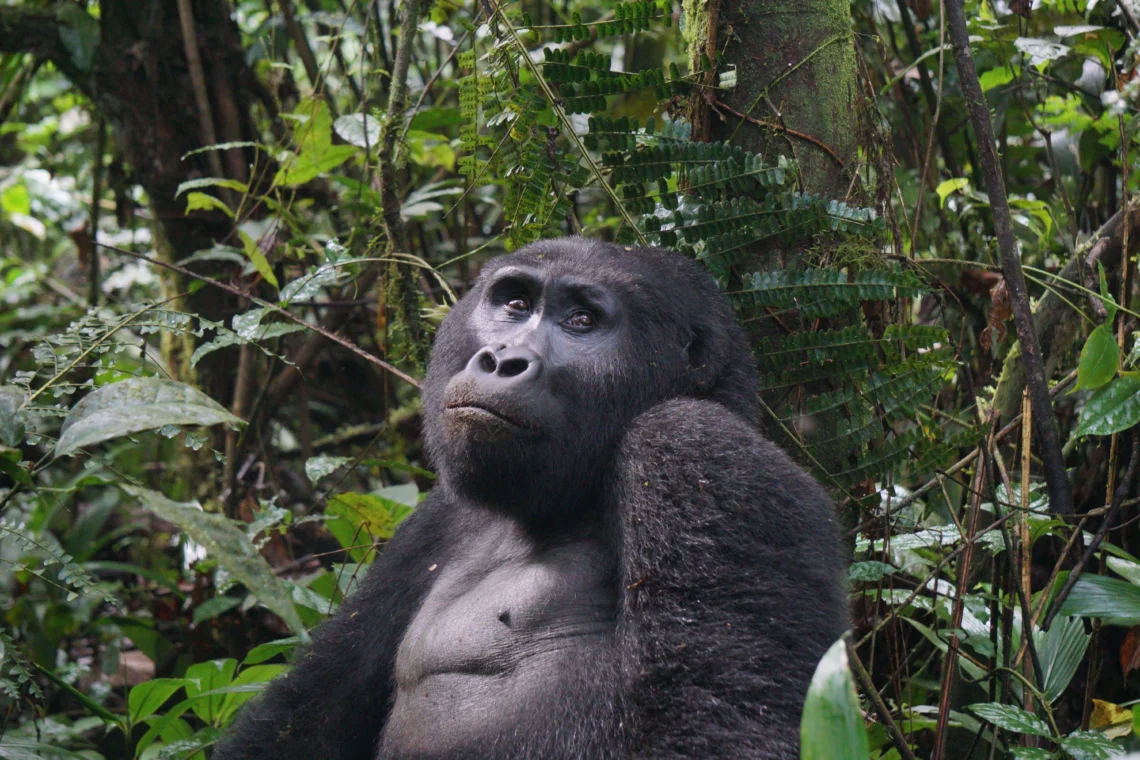
Gorilla Trekking in Uganda(2026) — Planning, Cost & My Honest Review
Gorilla trekking isn’t just another wildlife experience—it’s one of the rare moments where you come face-to-face with a species that shares nearly 99% of our DNA. At the beginning of 2025, I was finally able to make this trip, and there is no better spot than Uganda to see the Gorillas in the world.
Compared to other countries, Uganda strikes a perfect balance between cost, accessibility, and safety. But planning it can be overwhelming: permits, best time to visit, fitness level, cost, and choosing the right travel company.
This guide brings everything in one place, and I share my experience and honest feedback – so you know exactly what to expect before planning your Gorilla trekking in Uganda
Is Gorilla Trekking in Uganda worth it?
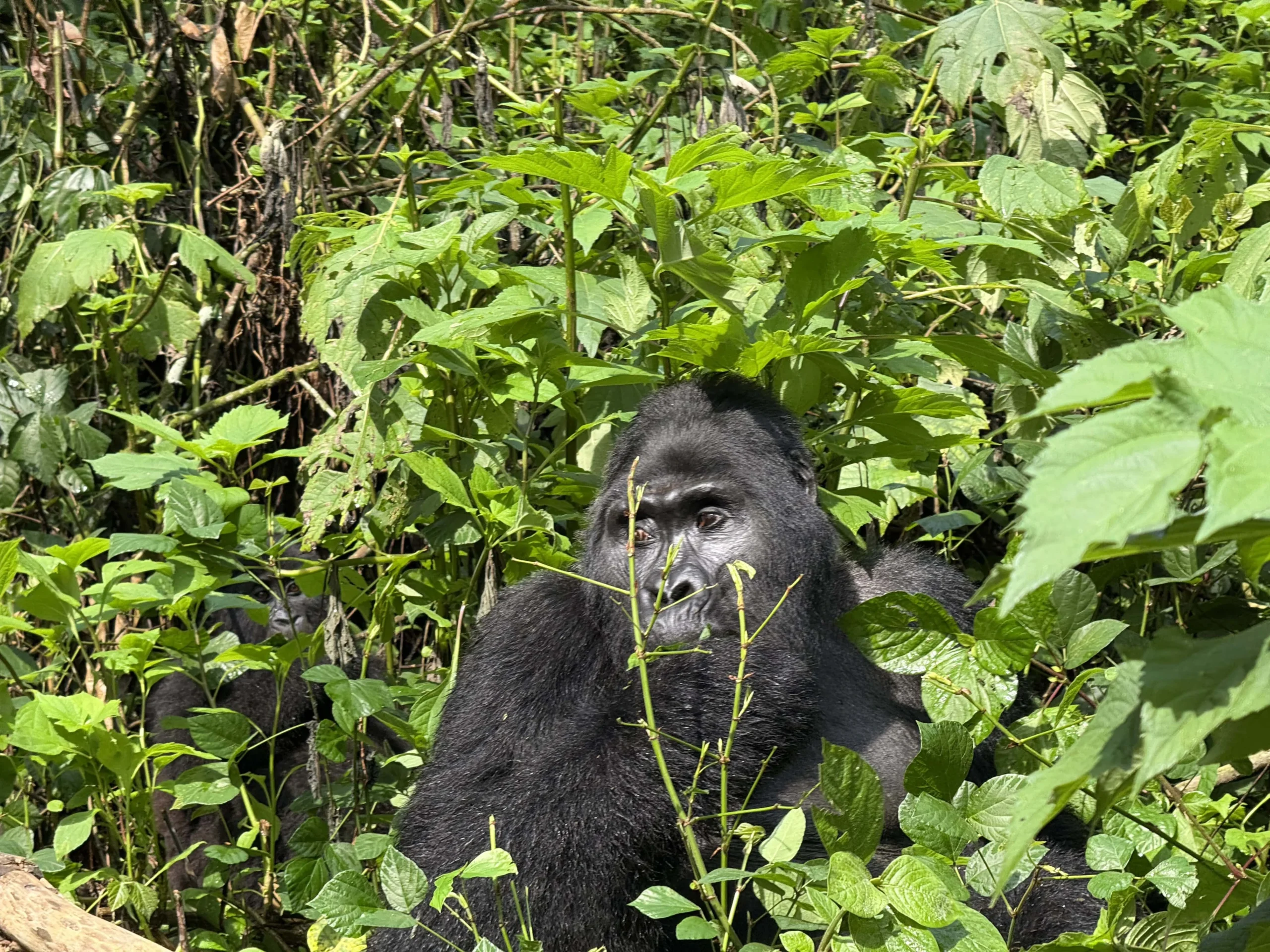
In my honest opinion, this was one of the best wildlife experiences I’ve ever had. I’d been planning it for a long time, so when it finally happened, what caught me off guard was how close we got to the gorillas. There was definitely fear—they’re huge and incredibly strong—but at the same time, seeing the baby gorillas made the whole thing feel strangely calm and human. I also got lucky with the trek itself; we reached the gorilla family within about ten minutes of starting, which I wasn’t expecting at all.
No matter the length of the trek, I suggest that everyone try this once, because there are very few chances in the world where you can be this close to gorillas, in their natural habitat. And knowing that your presence also helps support their protection makes the experience feel more meaningful.
Gorilla trekking comparison: Uganda vs Rwanda vs DRC
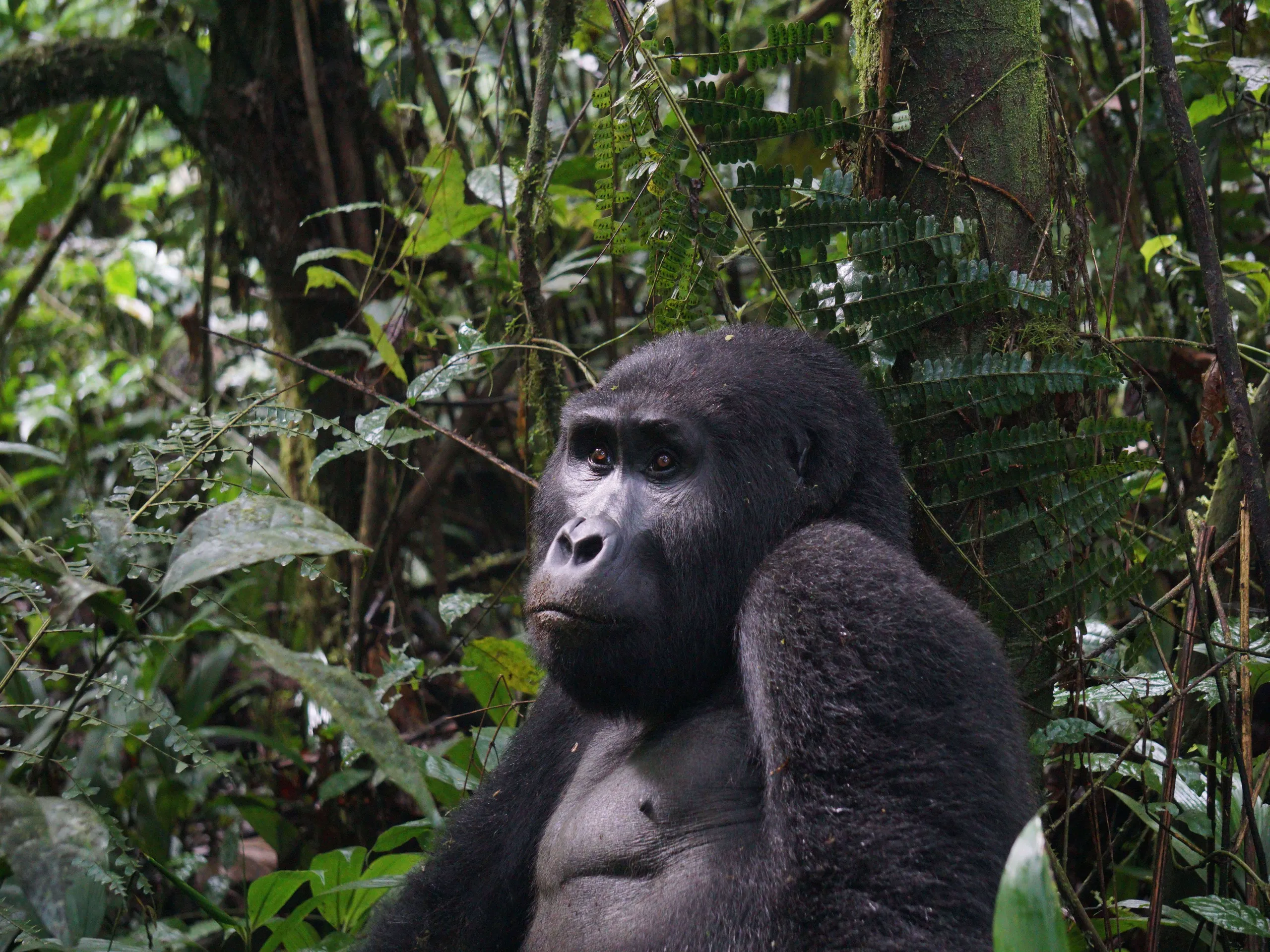
Before I share all the details about Gorilla trekking in Uganda, here is a comparison of why Uganda is a more favorable place than Rwanda and the DRC.
| Factor | Uganda | Rwanda | DRC |
|---|---|---|---|
| Gorilla trekking permit cost | $800 | $1,500 | $400 |
| Main Parks | Bwindi Impenetrable National Park, Mgahinga National Park | Volcanoes National Park | Virunga National Park |
| Total Mountain Gorillas* | 560+ Combining both Bwindi and Mgahinga | 300+ in Volcano National Park | 350 in Virunga Massif |
| Crowd Levels | Low to Moderate | High | Low |
| Safety & Stabilty | Stable & Well organised | Stable & Well organised | Risky because of the local unrest |
| **Overall Rating | ⭐⭐⭐⭐½ | ⭐⭐⭐⭐ | ⭐⭐⭐ |
* The global mountain gorilla population is estimated at 1,063 individuals (2019 census). Gorillas in the Virunga Massif move freely across Uganda, Rwanda, and the DRC, so country-level figures are approximate rather than fixed.
** These ratings are based purely on my personal experience and preferences, not as a judgment on the quality or importance of gorilla trekking in any of the countries listed.
Best time for gorilla trekking in Uganda
Like most countries in East Africa, Uganda has two main seasons for gorilla trekking. June to September is the primary season, with more consistent weather and better trail conditions, but it’s also the busiest time, and permits sell out quickly. The second main season runs from December to February and is usually a little quieter, while still offering good trekking conditions. I visited at the beginning of March, just after this period, and didn’t experience any rain at all. Being slightly off-season made permits easier to get, and accommodation and other costs were a bit lower.
The rainy months, mainly April–May and October–November, are usually not recommended for gorilla trekking. During this time, the trails can get very muddy and slippery, which makes the trek more tiring and unpredictable.
If you’re planning a longer trip? Here is my complete Uganda travel guide that will help you plan the trip
Gorilla Trek Permit Fees and Trip Cost
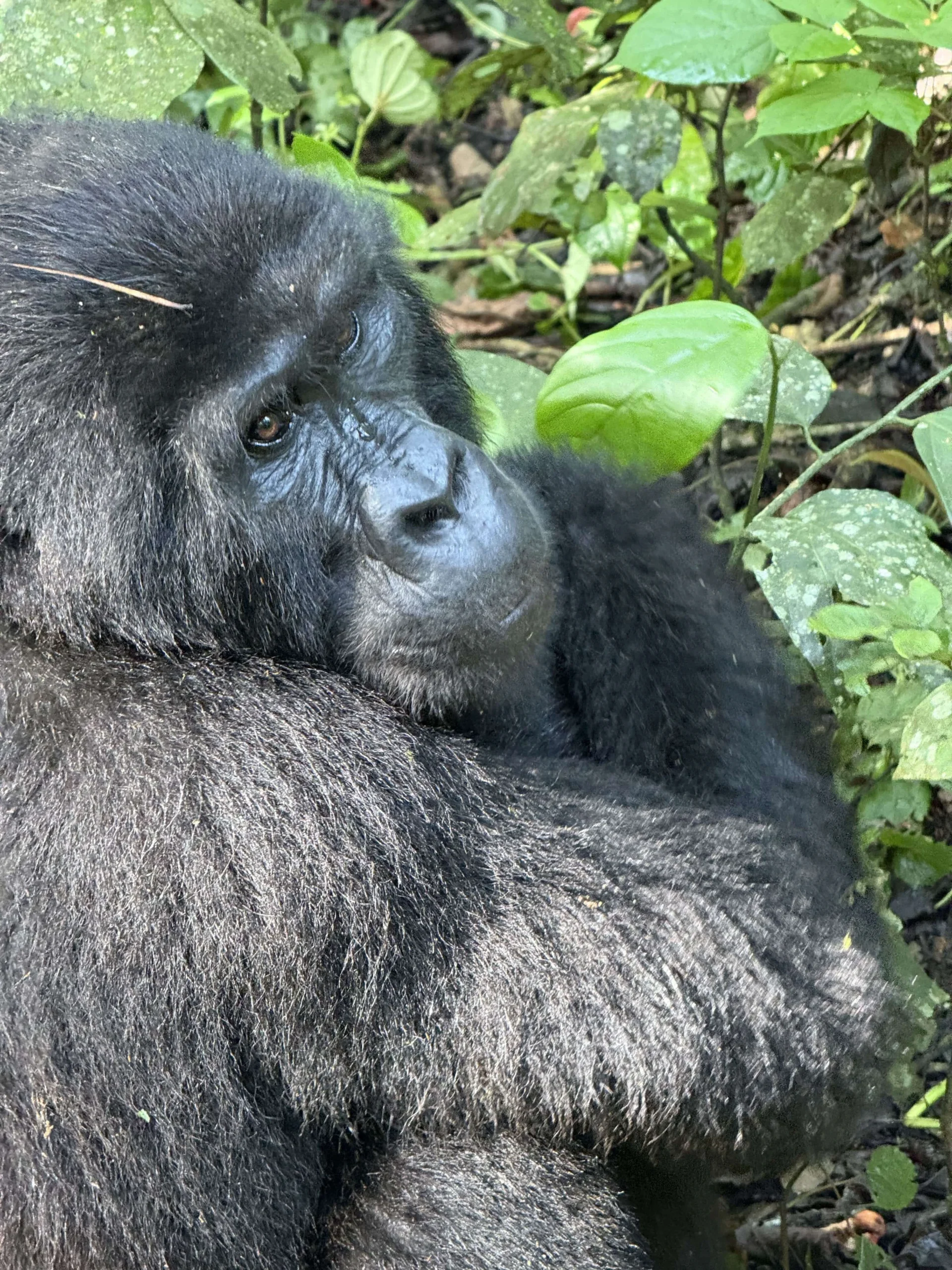
A gorilla permit costs $800 for Gorilla trekking in Bwindi or Mgahinga National Park. While a gorilla habituation permit costs $1500(more about this at the end). The permits include the guided trek, park entry, ranger support, and one hour of spending time with the gorillas.
In 2026, the Uganda Wildlife Authority announced a reduction in gorilla permit costs during the low season of April, May, and November to $600 compared to the regular price of $800.
Beyond the permit, there are other costs like accommodation, transport, food, and tips for your guides and porters. On average, a budget to mid-range trip might cost anywhere between $1400 to $2200 per person for a 3-to 4-day trip, but a lot depends on the number of travelers and also the season. I did this trip with Buffalo Safari Camps, and the best suggestion would be to reach out to them and let them plan your perfect trip.
Buffalo Safari Camps
Contact: +256 758 098428(WhatsApp)
Email: info@buffalosafaricamps.com
Gorilla trekking locations in Uganda
Now, while you’ve somewhat made up your mind about choosing Uganda for Gorilla trekking, let me share some more information as to where it would be best for you to see the Gorillas, considering you’re planning 3-4 months ahead, and can get the permit for the respective sector.
The Bwindi Impenetrable National Park is divided into 4 sectors
- Buhoma
- Ruhija
- Rushaga
- Nkuringo
And the Mgahinga National Park has just one main family, Ntebeko. I have added a comparison table below based on my research and experience to help you pick the best sector.
| Factor | Buhoma | Ruhija | Rushaga | Nkuringo | Mgahinga (Ntebeko) |
|---|---|---|---|---|---|
| Where it is | Northern side of Bwindi Impenetrable National Park, easiest to reach | Eastern side of Bwindi, higher altitude | Southern Bwindi, close to Rwanda | Southern Bwindi, more remote | Mgahinga Gorilla National Park, near Kisoro |
| Gorilla families | A good number of families | Fewer families compared to others | Most families, thus more options | Only a few families | One main family that sometimes moves |
| Trek difficulty | Mostly manageable, but depends on the day | It can be tiring because of the altitude | It canbe short or long, depending on the location | Often steep and physically demanding | Can feel tiring due to the terrain |
| Crowd in the sector | Usually busy, especially in peak season | Quieter than Buhoma | Moderate number of groups | One of the quietest sectors | Very quiet most days |
| Permit situation | Sells out fast in peak season | Limited permits | Usually easiest sector to get permits | Limited permits | Very limited permits |
| Getting there | Straightforward and easier to plan | Longer drives inside the park | Easier if coming via Kisoro or Rwanda | Takes more time to reach | Easier from Kisoro |
| Rating (out of 5) | ⭐⭐⭐⭐½ Because of the ease of reach trekking | ⭐⭐⭐⭐ | ⭐⭐⭐⭐ | ⭐⭐⭐½ | ⭐⭐⭐½ |
My Gorilla Trekking Experience
My Uganda journey started almost 10 days before I reached Bwindi. This was the last sector of my 2-week Uganda itinerary.
Day 0: Reaching Bwindi Impenetrable National Park
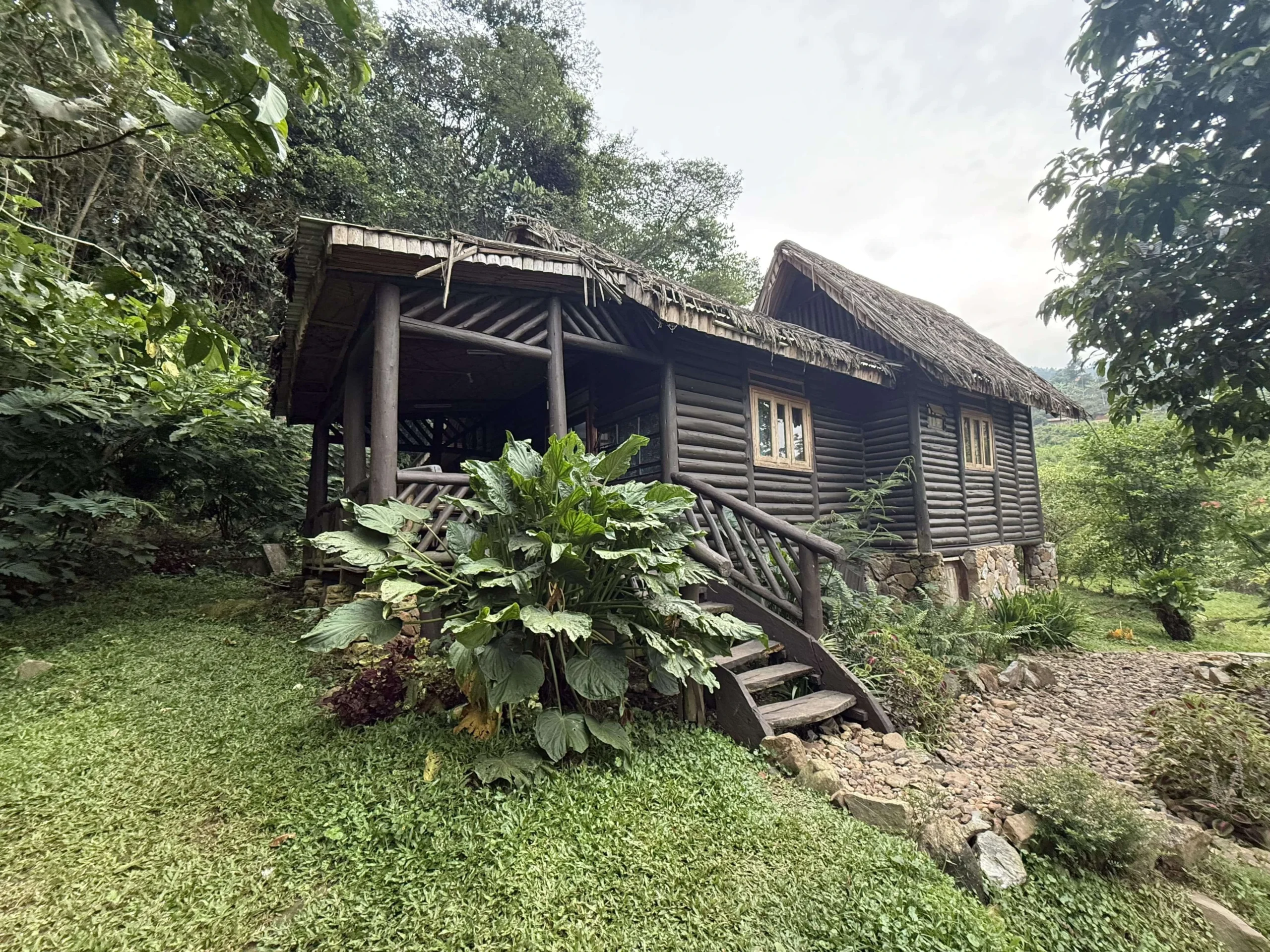
After my final game drive in Queen Elizabeth National Park, I headed towards Bwindi. The drive was short but bumpy. As soon as I reached Sahaya Rafiki, I was genuinely impressed. The homestay sits right inside the forest, with a stream flowing nearby and only natural sounds around. Buffalo Safari Camps did a great job finding this place for me.
That’s when Moses began telling me more about the homestay and his story, which added a lot more meaning to staying there. Sahaya Rafiki is a community-run homestay that focuses on supporting local livelihoods around Bwindi. The place is small and cozy, hosting only four to five people at a time. After dropping my bags, I walked around the property and sat by the stream for a bit.
Visiting the Batwa Tribe
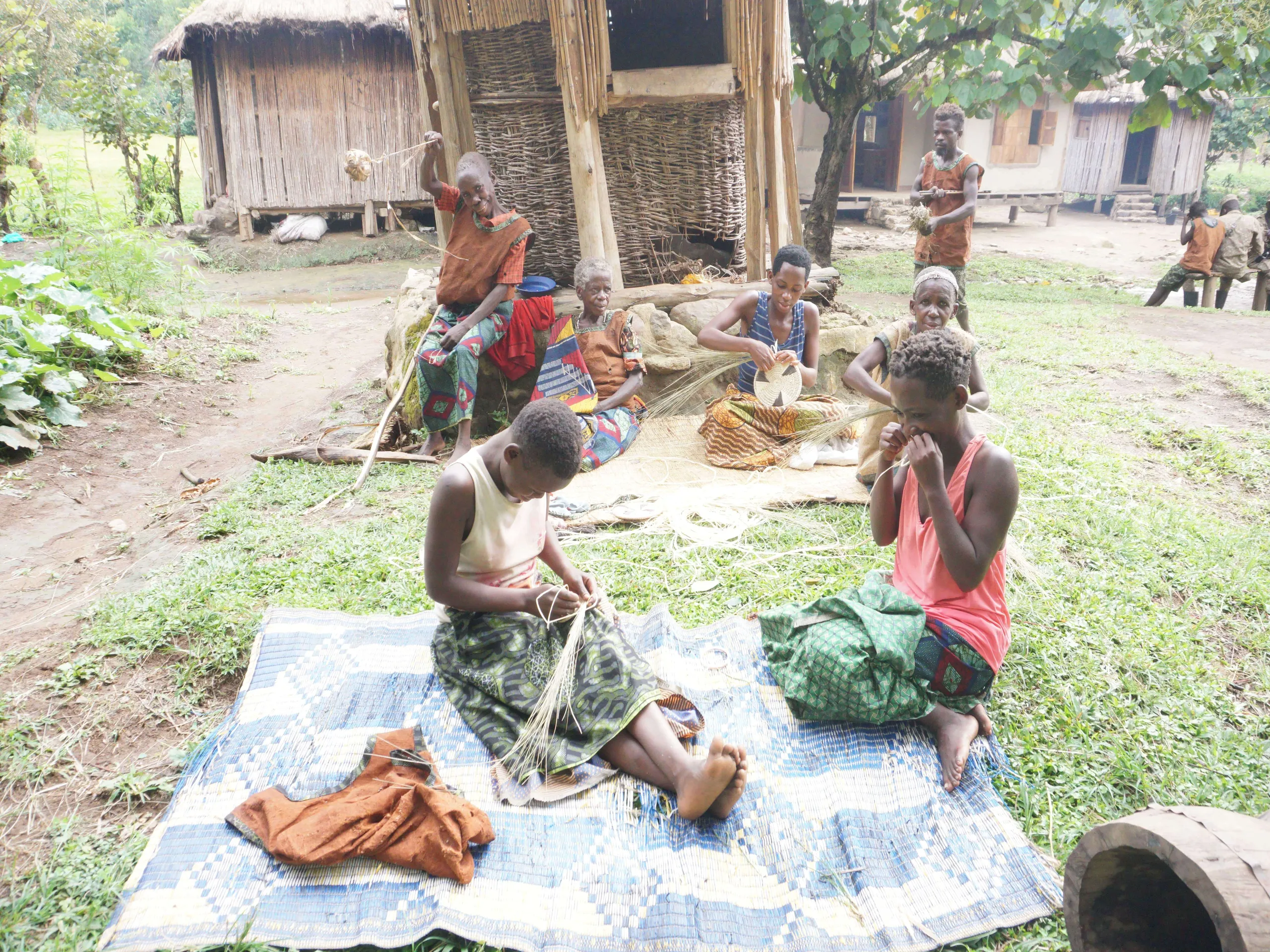
Since I wasn’t sure how long the gorilla trek would take, I decided to visit the Batwa tribe first. The Batwa are one of the oldest communities in this area and were the original forest dwellers around Bwindi. For generations, they depended fully on the forest for their daily life. When the area became protected, they were moved out, and today many Batwa families live in settlements outside the forest.
I was welcomed by members of the community, who showed me how they used to hunt and how they made fire. I also saw the type of houses they lived in and tried archery, which was harder than it looked.
Later, I met the tribe’s leader, who spoke about their history and way of life. This was followed by a dance performance, which felt like their way of sharing their culture. Before leaving, I bought a few handmade souvenirs to take home and to support the community directly.
Gorilla Trekking Day
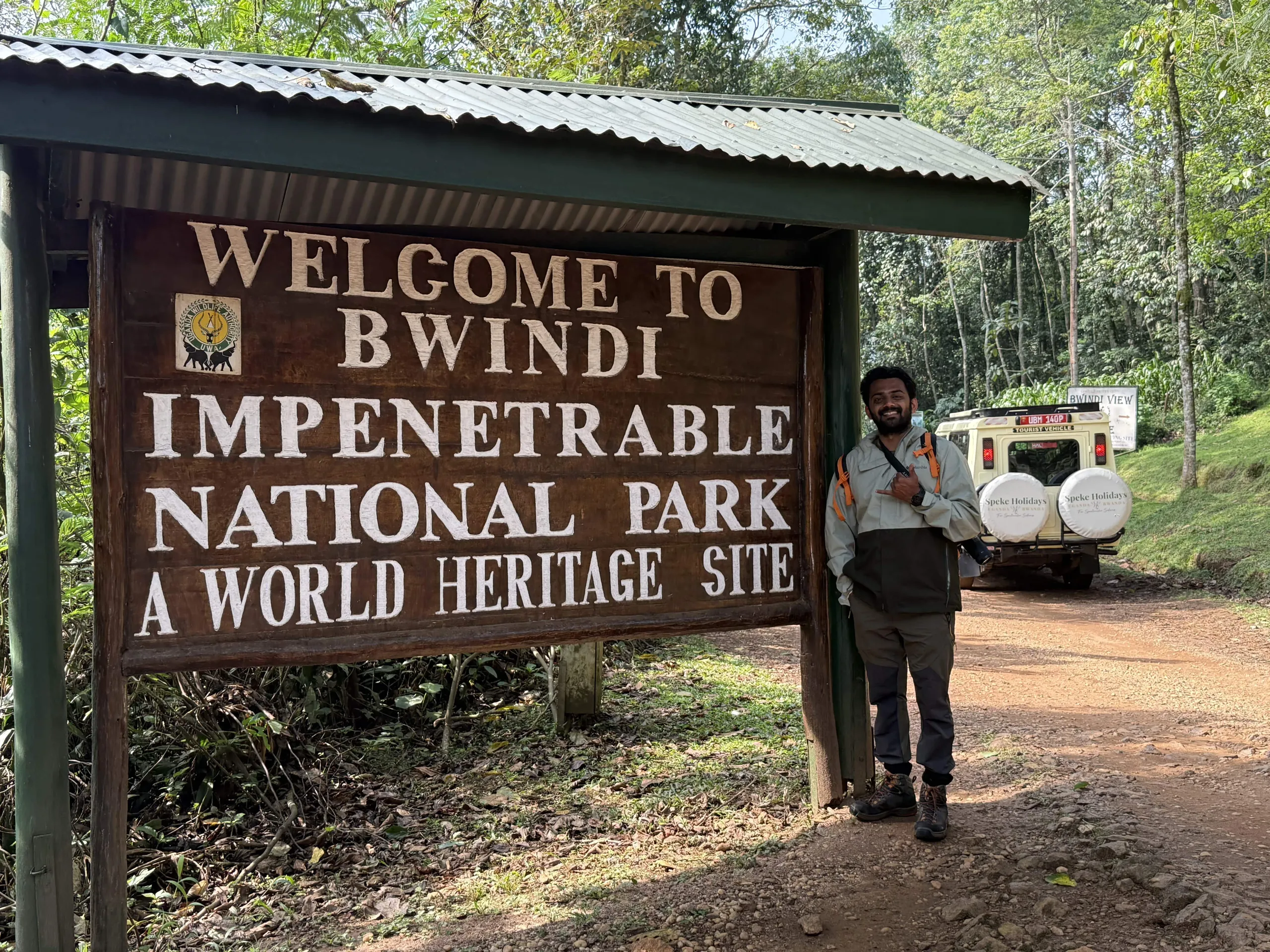
I woke up early, anxious because how could I sleep thinking I was finally going to see the Gorillas. We had to be at the center by 8 am. First, there was a dance performance by the Batwa Tribe, and later, they informed us about tracking the Gorillas. We were then made into groups and told the Gorilla family we would be tracking today. The gorilla family that I got was called Rushegura, and it had 2 silverback gorillas in it. Our group consisted of 4 people, of whom one of the travelers had 2 ACL tears and was on crutches.
I thought to myself how she was able to track the Gorillas, but damn, she was strong even though she had a helper; even walking with those things is unimaginably tough.
To our spurpise as soon as we crossed one of the bridges, which was just 7-8 minutes in the trek, our guide told us to wear the masks. This is an indication that the Gorillas are closer, and I was wondering wow, did we already find them, and that’s when he told us to look at the top. And I saw one of them coming down holding the tree.
What One Hour with Mountain Gorillas Is Really Like
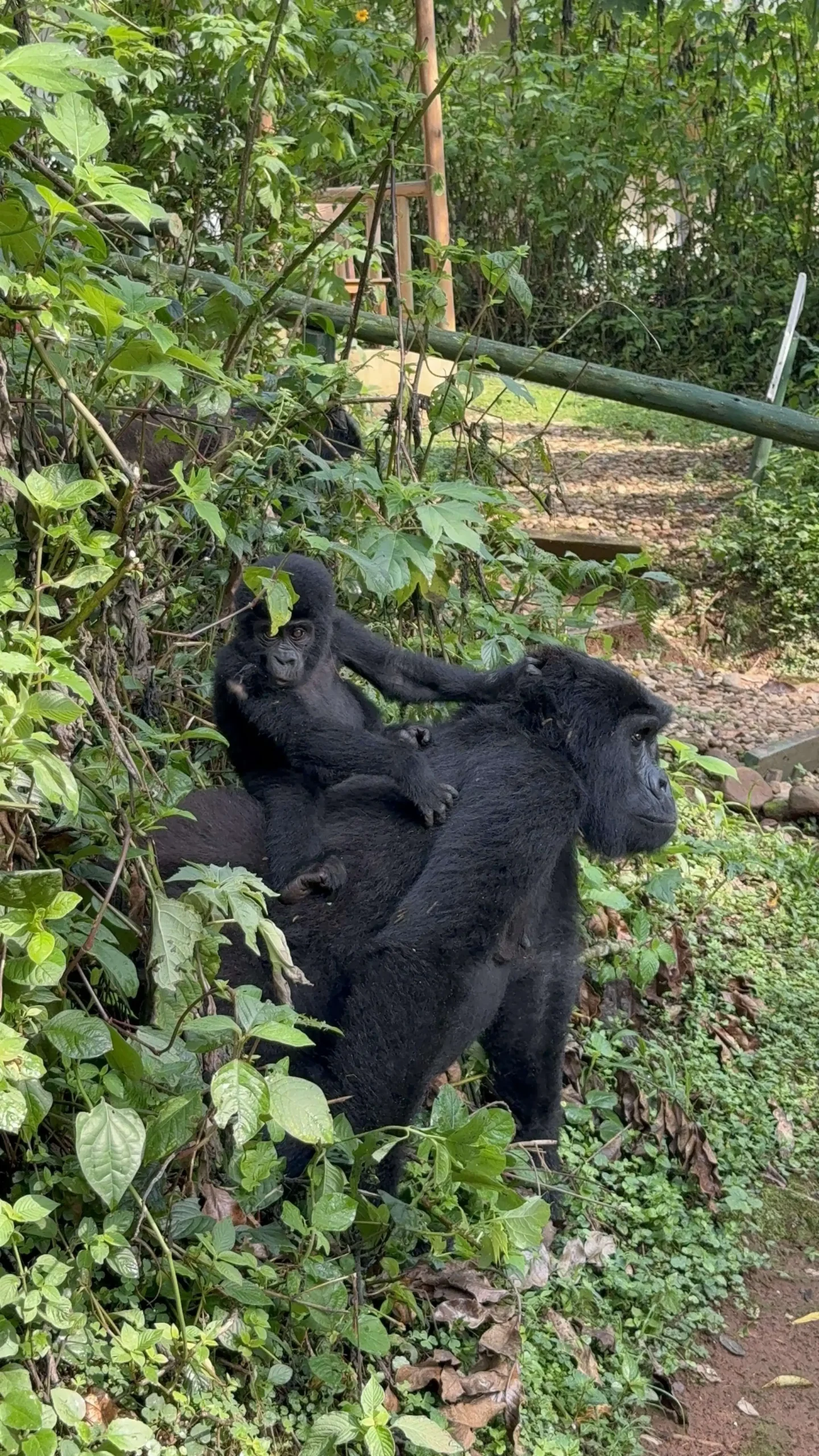
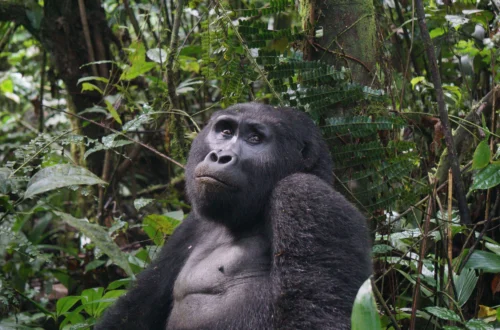
By the time the hour was ending, it already felt too soon. It went by so fast. In that short time, I stood just five feet away from a blackback gorilla that was almost twice our size. I watched a baby gorilla playing with its mother, completely in its own world.
I remember watching the silverback cross a stream first. He was calm and steady, almost gentle. Just after crossing the stream, he beat his chest and charged toward us. I won’t lie, my heart skipped a beat. Luckily, the ranger was right in front of me. I even saw a brief fight break out within the family.
Note: No matter when you find the gorillas, you are allowed only one hour with them.
After the Trek: Lake Mulehe
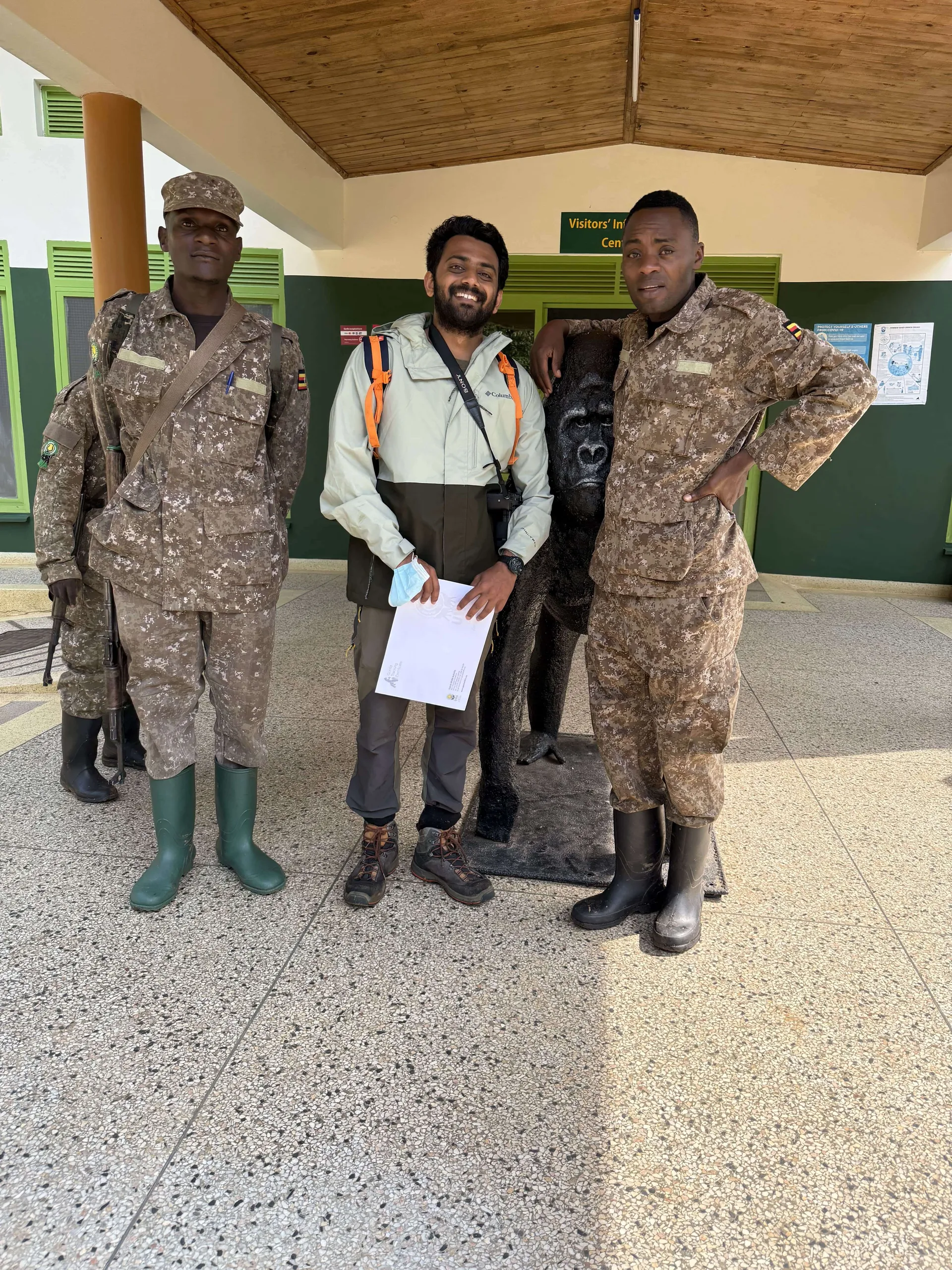
After the trek was over, I got a certificate from Homax, our guide, and since the trek was over way before the afternoon, I had my packed lunch at the homestay. I relaxed the entire evening and then went to Lake Mulehe the next day.
I stayed at a lodge by Lake Mulehe, right above the water. The view was quiet and peaceful. I sat there for a long time, doing nothing, just enjoying the serene view. After the last two weeks, which had been exhausting, this was exactly what I needed.
3 & 4-Day Gorilla Trekking itinerary
Now I understand, everyone can’t do a 2-week trip, and thus here I’m sharing the most asked itineraries, 3 & 4-Day Gorilla trekking.
3-Day Gorilla Trekking Itinerary from Kampala/Entebbe
- Day 1: Transfer to Bwindi
Drive from Kampala or Entebbe to Bwindi Impenetrable National Park. Evening arrival. - Day 2: Gorilla Trekking
Morning briefing followed by gorilla trekking in Bwindi. One hour with the gorillas. Rest at the lodge. - Day 3: Return to Kampala / Entebbe
Drive back to Kampala or Entebbe for departure.
Now, why I would not suggest this is that the drive from Kampala/Entebbe is 10-12hours long. This becomes super strenuous, considering the tracking of the gorilla was also longer. The next few suggestions are more feasible than this one
3-Day Gorilla Trekking Itinerary from Kigali
- Day 1: Transfer from Kigali to Bwindi
Drive from Kigali to Bwindi Impenetrable National Park via the Rwanda–Uganda border. Evening arrival at the lodge. - Day 2: Gorilla Trekking
Morning briefing followed by gorilla trekking in Bwindi. One hour with the gorillas. Rest at the lodge. - Day 3: Return to Kigali
Drive back to Kigali for departure.
For everyone planning a trip, they need to understand that Bwindi is closer to Kigali than Kampala.
Note: Kigali → Rushaga / Nkuringo → 6–8 hours
Kigali → Buhoma / Ruhija → 8–10+ hours
3-Day Fly-in Gorilla Trekking Itinerary
- Day 1: Fly to Bwindi (Buhoma)
Fly from Entebbe International Airport or Kajansi Airfield (Kampala) to Kihihi Airstrip. Drive from Kihihi to the Buhoma sector and check in at the lodge. - Day 2: Gorilla Trekking
Morning briefing followed by gorilla trekking in the Buhoma sector of Bwindi Impenetrable National Park. One hour with the gorillas. Rest at the lodge. - Day 3: Fly Back to Entebbe / Kampala
Transfer back to Kihihi Airstrip and fly to Entebbe or Kajansi for departure.
This is the easiest and least tiring way to reach Buhoma, but also expensive.
Typical 4-Day Gorilla Trekking Itinerary(Suggested)
- Day 1: Transfer to Bwindi
Travel from Kampala or Entebbe to Bwindi Impenetrable National Park. Evening arrival and lodge check-in. - Day 2: Gorilla Trekking
Morning briefing followed by gorilla trekking in Bwindi Impenetrable National Park. One hour with the gorillas. Rest at the lodge. - Day 3: Lake Bunyonyi or Lake Mulehe
Transfer to Lake Bunyonyi or Lake Mulehe. Slow day by the lake to relax and unwind. - Day 4: Return to Kampala / Entebbe
Travel back to Kampala or Entebbe for departure.
This is the most relaxed itinerary, and I would suggest that everyone plan this for their Gorilla tracking experience.
Choosing the right operator for Gorilla trekking
This is one of the most important parts of planning a gorilla trekking trip. Research goes a long way, but the right operator simplifies everything.
My trip was planned by Buffalo Safari Camps, and I didn’t have to worry about the details. I told them I wanted to trek in the Buhoma sector, and they handled the permits and logistics. We were able to secure Buhoma, just as planned.
From there, everything fell into place. The lodges and homestays they suggested were excellent, and the overall planning felt smooth and well-thought-out. With the right operator, you really just need to share your dates, preferences, and pace. The rest gets planned for you.
Buffalo Safari Camps
Contact: +256 758 098428(WhatsApp)
Email: info@buffalosafaricamps.com
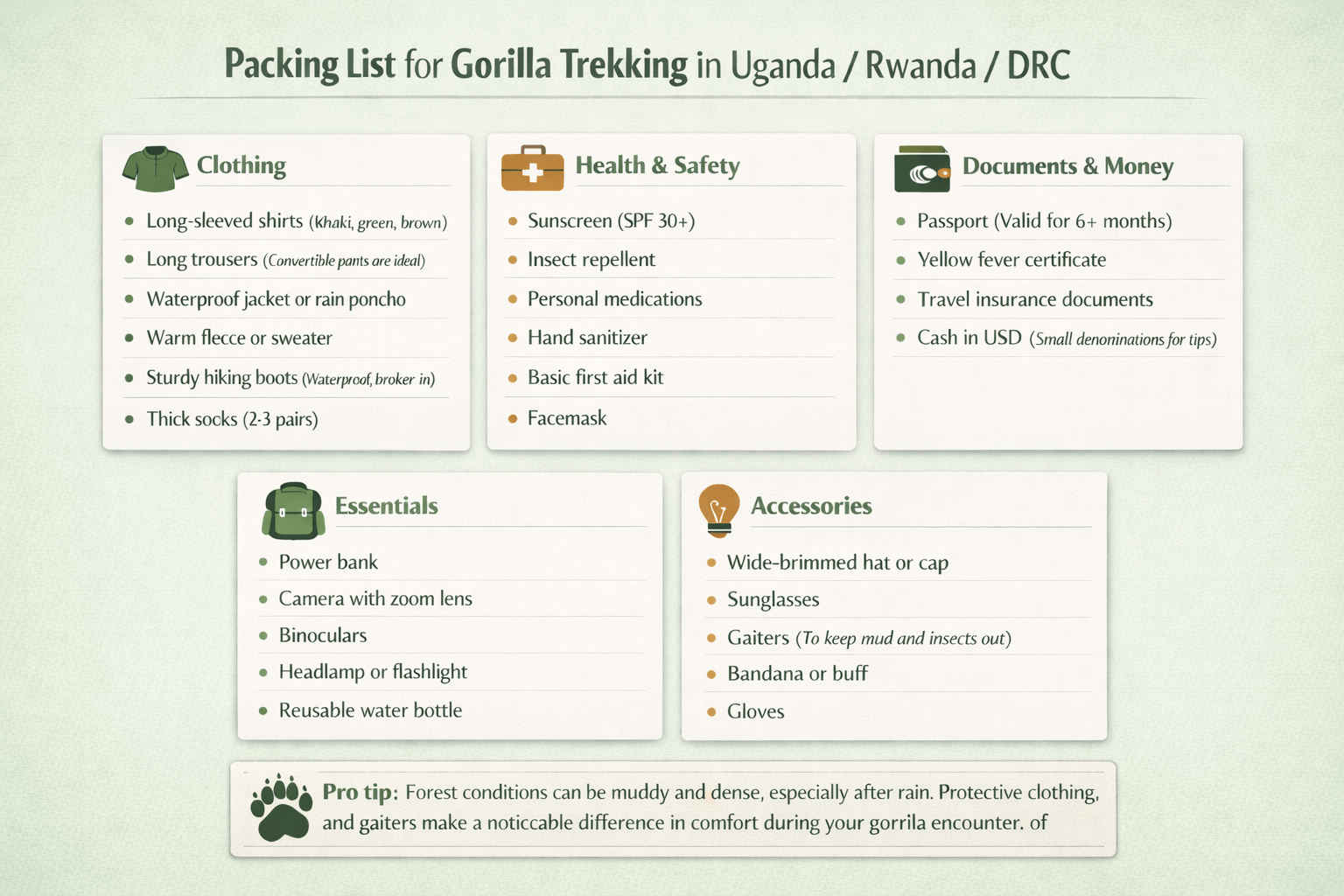
Packing List for Gorilla Trekking
Here is a packing list for Gorilla trekking in Uganda, Rwanda, or the DRC.
What is Gorilla Habituation
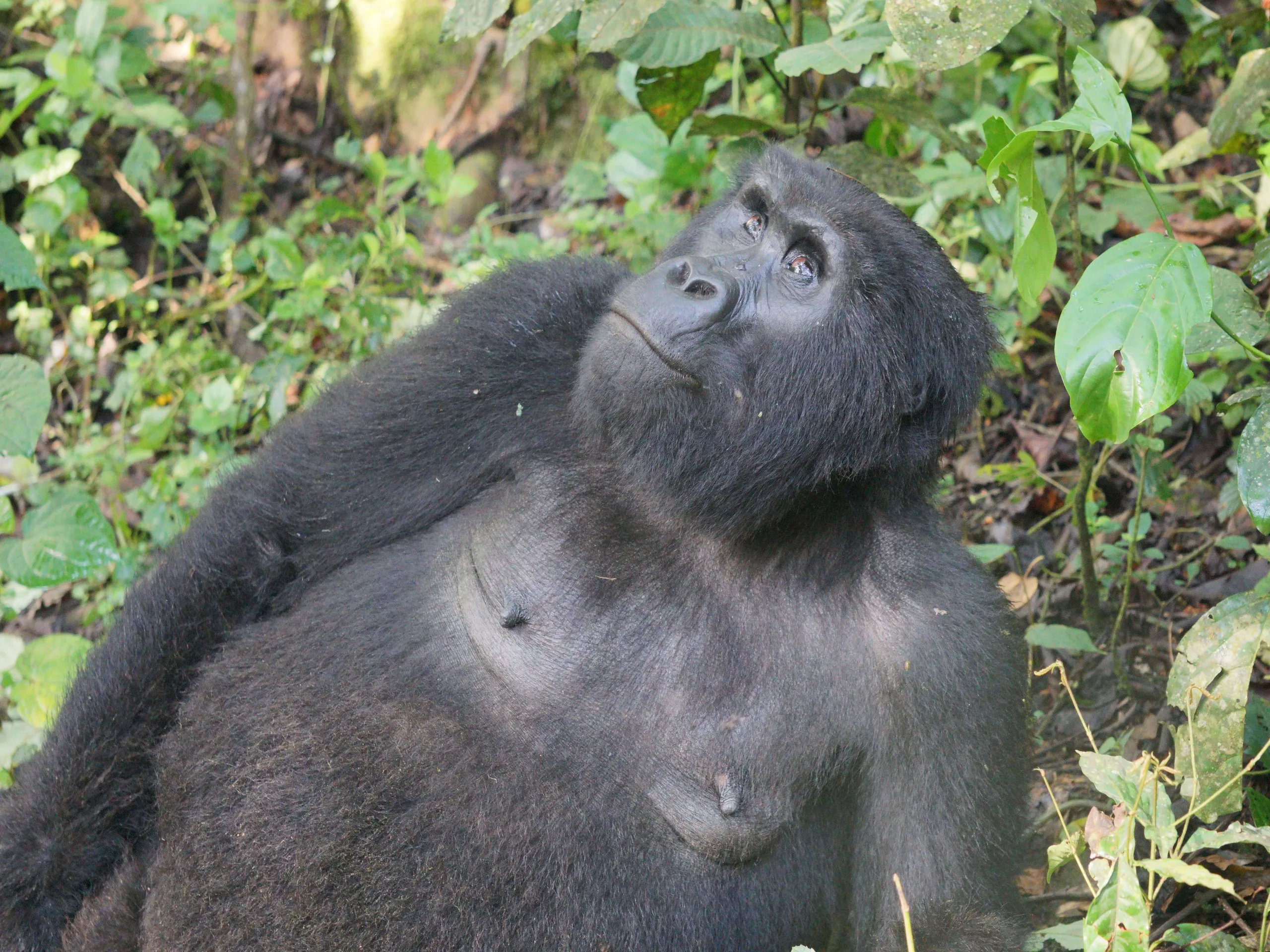
I know one hour with the gorillas can feel short for some people. What most visitors don’t realise is that the gorillas we usually see on treks are already habituated. This means they are used to humans being around them and entering their territory. Not all gorilla families are like this. In fact, many gorillas have never had any contact with humans at all.
Gorilla habituation is a special program where selected gorilla families are slowly introduced to human presence. Instead of one hour, you get to spend three to four hours with them, alongside researchers and rangers. The goal is to help the gorillas get used to humans over time so they can eventually be opened for regular trekking.
This experience is more unpredictable, as the gorillas are not fully used to people yet, which makes it more intense and thrilling. It also costs almost double($1500) the price of a standard permit and is known as Gorilla Habituation.
What to do after the Gorilla trekking
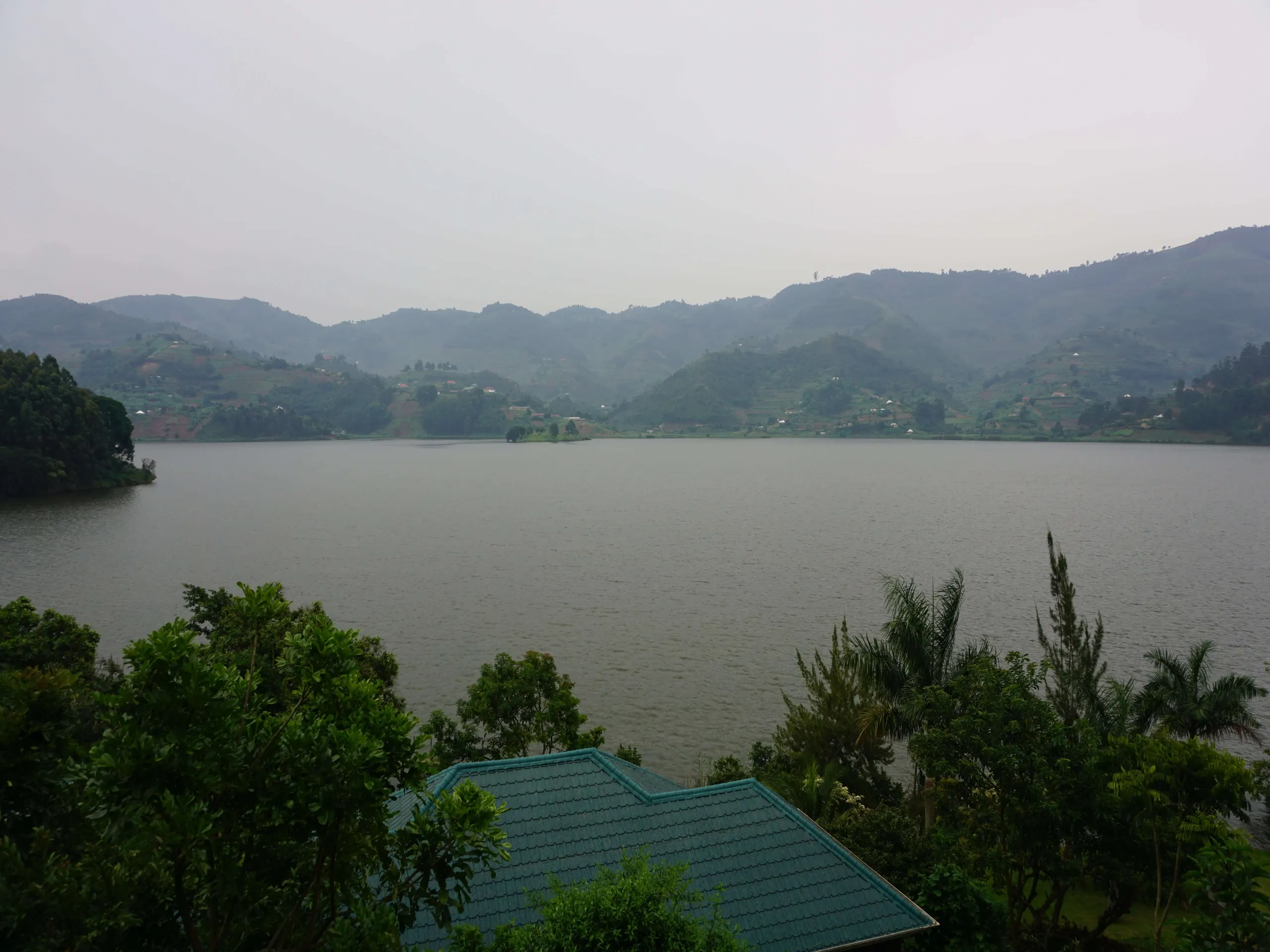
If you’re planning a trip to Uganda and not coming only for gorilla trekking, there are a few great ways to extend your journey and see more of the country.
- Spend time around Lake Bunyonyi
A good place to slow down after the trek. You can relax or try light adventure activities like kayaking and boat rides, with great views all around. - Relax near Lake Mulehe
This is what I did. It’s quiet, calm, and perfect if you just want to rest and take it easy after a physically demanding experience. - Stop at Lake Mburo National Park on the way back to Kampala or Entebbe
You can do a cycling safari here, which is one of the most unique experiences in Uganda. It’s also one of the few places in the country where you can see zebras.
FAQ’s about Gorilla trekking in Uganda
Is gorilla trekking in Uganda worth it?
Yes, it is. Seeing gorillas up close in their natural habitat is something you don’t really get anywhere else. The experience feels raw, personal, and very different from a normal safari.
How expensive is gorilla trekking in Uganda?
The gorilla permit costs USD 800 per person. On top of that, you’ll need to budget for accommodation, transport, food, and tips. Overall, it’s not cheap, but Uganda is still more affordable than Rwanda.
Why is gorilla trekking so expensive?
The permit fee helps fund conservation, ranger salaries, veterinary care, and local communities. Only a limited number of people are allowed to see the gorillas each day, which also keeps the experience controlled and safe.
How difficult is gorilla trekking?
It depends on the gorilla family you’re assigned. Some treks are short and manageable, while others can take a few hours and involve steep terrain. You don’t need to be super fit, but basic fitness helps.
How fit do you need to be for gorilla trekking?
You don’t need to be an athlete. If you can walk for a few hours and handle uneven ground, you’ll be fine. Porters are available and highly recommended if you need help.
What is the best month to go gorilla trekking in Uganda?
The drier months are usually easier for trekking. June to September is the main season, followed by December to February. Shoulder months can also be good and slightly quieter.
How far in advance should I book gorilla trekking?
If you’re traveling in peak season, it’s best to book 3–6 months in advance. Permits can sell out quickly, especially in popular sectors.
What should I wear for gorilla trekking?
Wear long sleeves, long pants, sturdy hiking shoes, and gloves. The forest can be muddy and dense, so covering up helps protect against scratches and insects.
How many days do you need for gorilla trekking?
If you’re coming just for gorilla trekking, plan 3–4 days. One full day is needed for the trek itself, while the extra days help with travel to and from Bwindi and give you time to rest before or after the trek. This also gives you some buffer in case of long drives or unexpected delays.
What happens if a gorilla charges during a trek?
Charges are rare, but they can happen as we are in the forest and their natural habitat. Rangers are trained to handle these situations and will guide you on what to do. Staying calm and following instructions is key.
Are humans safe around gorillas?
Yes, if you follow the rules shared by the guide/rangers. Gorillas are closely monitored, and rangers ensure safe distances are maintained. Wearing masks and following guidelines helps protect both humans and gorillas.
Which is better for gorilla trekking, Uganda or Rwanda?
Uganda is generally a better value for money, with more trekking sectors and varied experiences. Rwanda is more expensive but offers easier access. But both places offer an equally special experience
Final thoughts on gorilla trekking in Uganda
From spending time with the Batwa tribe to standing just a few metres away from the gorillas, the whole experience felt very real. Seeing animals that share almost 99% of our DNA in their natural habitat is something that stays with you in a quiet way.
Gorilla trekking in Uganda takes effort and planning(and money obviously :p), but it’s worth it. It’s one of those experiences that feels rare and hard to compare to anything else.
I hope this guide has answered all your questions regarding Gorilla trekking in Uganda. If you have any other questions, please drop them in the comments, or you can DM me on Instagram:stories.of.raku.
Further Read: What to do in the Adventure Capital of East Africa
This post contains details of my experience with Buffalo Safari Camps, which kindly hosted me during my trip across Uganda. All opinions, thoughts, and recommendations are entirely my own and reflect my personal experience with the services, planning, and hospitality provided by their team.

One Comment
Sunayna Sharma
Amazing, I have rarely come across some blog this detailed and so beautifully depicting experience